How Our Maintenance Shop Keeps Training Aircraft Flying
Published by:
Greg Hadley
In This Article
You land, taxi back, and notice the oil pressure gauge sat a needle-width lower than usual on the way home. What happens next says more about a flight school than any brochure. At a school with its own shop, that squawk walks about fifty feet to a mechanic who worked on the same airplane last week. At a school that sends maintenance across the field or across town, the airplane, and your next lesson, wait.
Here at SimpliFly Flight School, our maintenance shop sits on the field at Falcon Field in Mesa. This post explains what that shop does for you as a student, what the rules require for a training airplane, and why the preflight you do every morning is part of the same system.
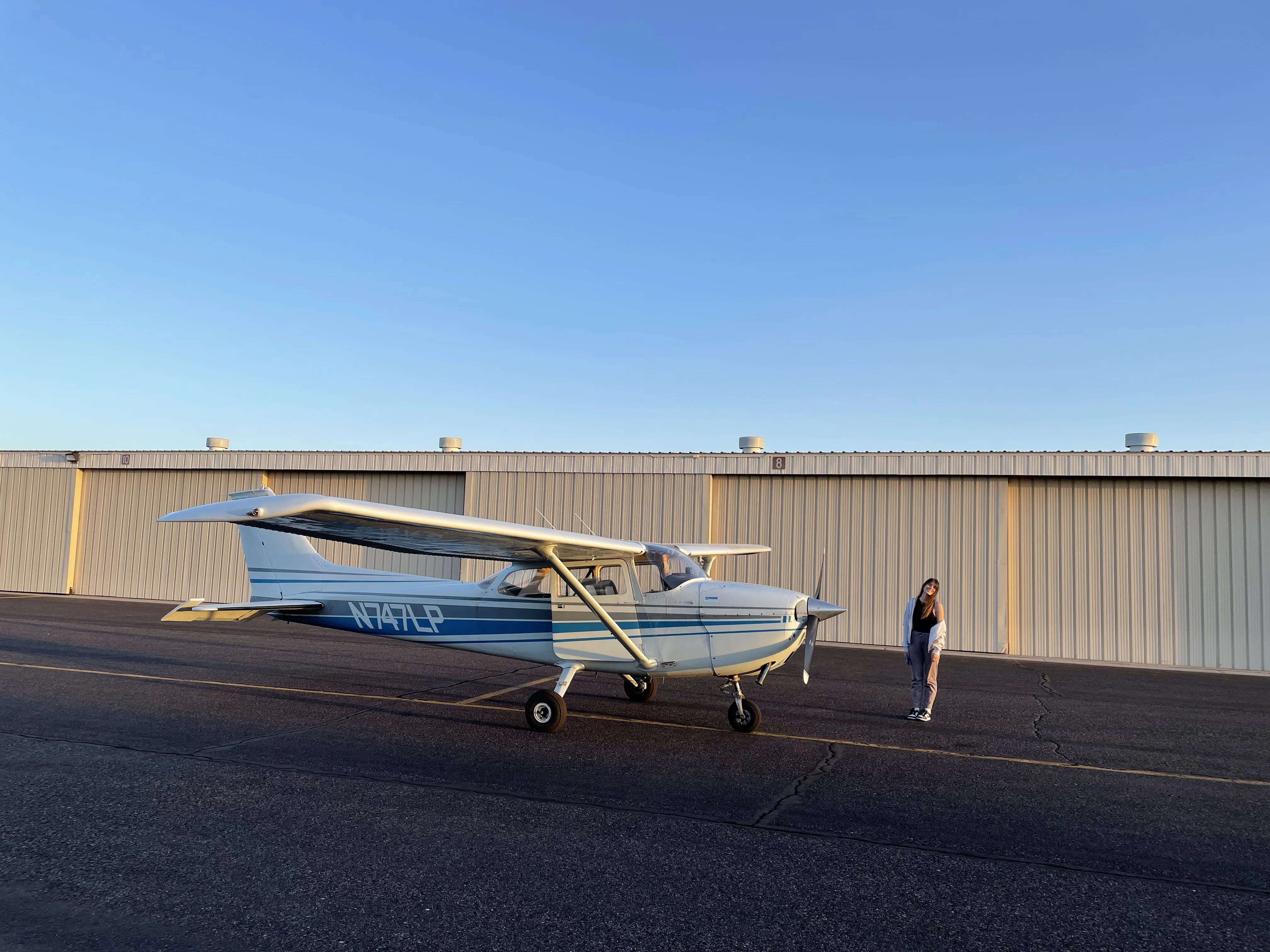
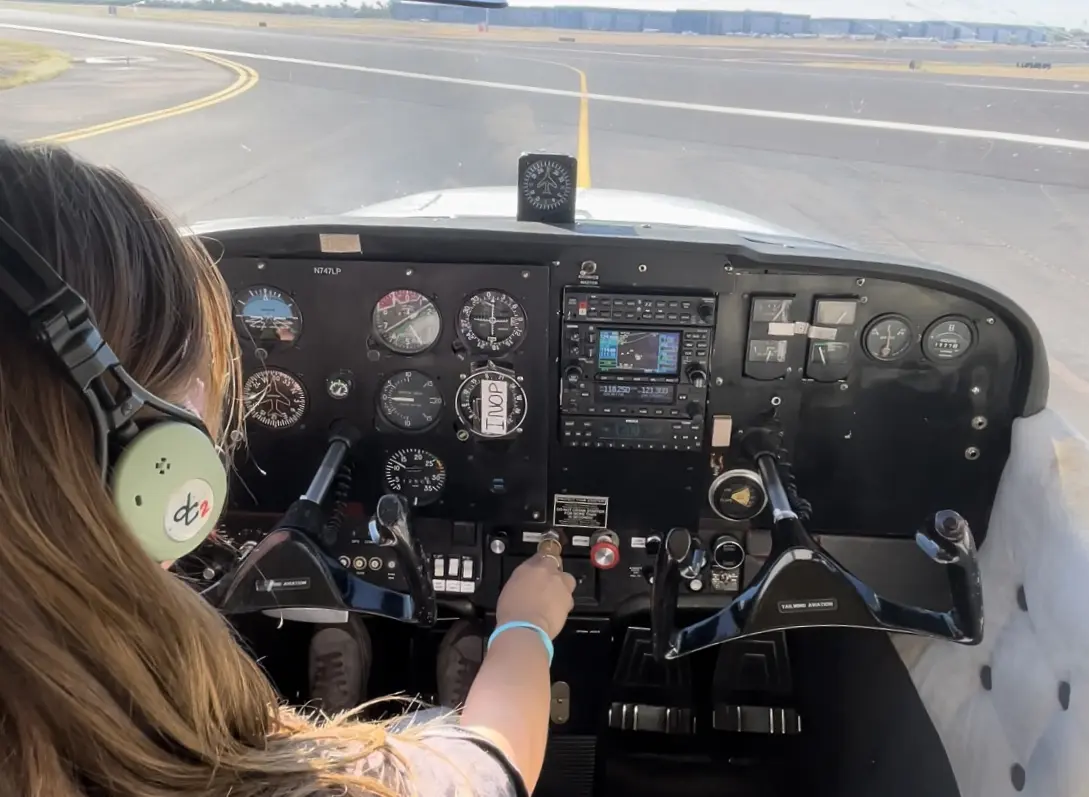
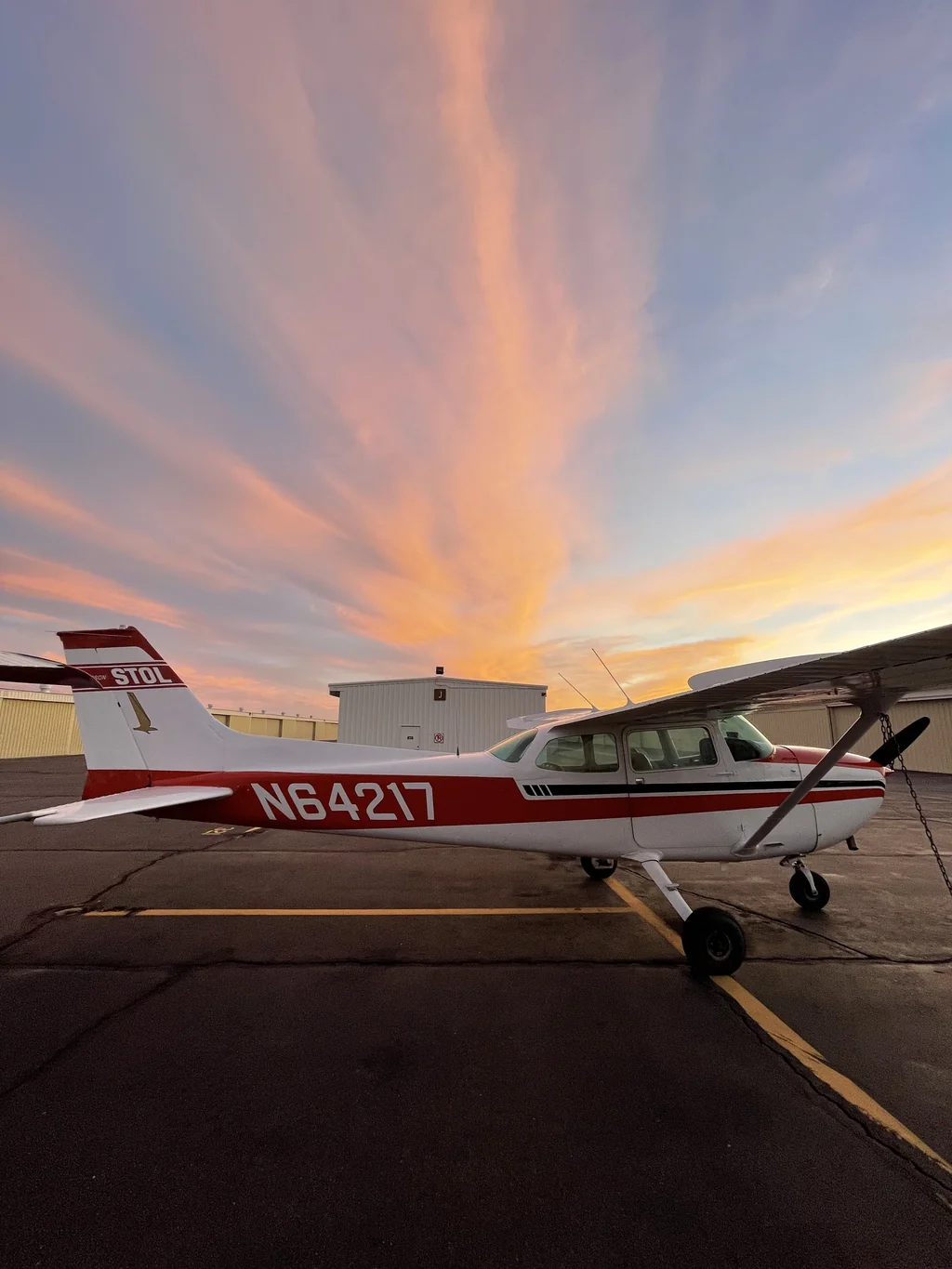
N747LP on the ramp at Falcon Field, one of the 172s our shop keeps in rotation.
Who Signs Off the Airplane You Fly
An FAA-certificated mechanic holds an Airframe and Powerplant certificate, the A&P. An Inspection Authorization, the IA, is the additional authorization that lets a mechanic sign off an annual inspection and approve certain major repairs for return to service. Our shop has an A&P/IA on staff, plus two A&P apprentices learning the trade on the airplanes you train in. You can meet the whole crew on our team page.
There is a second thread that runs through this school. Our Chief Pilot, Anders Jones, spent many hours working in the maintenance hangar when he was not flying, which is why his systems knowledge shows up in the cockpit. Instructors who have had a cowling open explain an engine differently than instructors who have only read about one.
What the 100-Hour Clock Means for a Trainer
Every aircraft needs an annual inspection, the deep look at the airframe, engine, and records once a year. Training airplanes flown for hire come due for a 100-hour inspection as well, because they fly more in a month than many privately owned airplanes fly in a year. A busy Cessna 172 in our fleet can hit that mark in a matter of weeks.
The federal rules behind this live in Part 91 of the aviation regulations. The owner or operator is responsible for keeping the aircraft airworthy, inspections happen on the required intervals, and every inspection and repair goes into the aircraft records. You can read the inspection rule yourself at 14 CFR Part 91. What an in-house shop changes is not the rule. It changes how quickly a 100-hour gets done and how much the mechanics already know about that tail number.
A trainer's engine sees more starts and stops in a week than most airplanes see in a season.
How a Squawk Becomes a Fixed Airplane
A squawk is any discrepancy you write up after a flight: a radio that cut out, a tire that looked low, a gauge that read strange. At SimpliFly, the shop’s habit is to catch small items early, and the fastest way to do that is for students to write up everything, even the things that seem minor. Your instructor will show you how on your first few flights.
From there the airplane either stays in service or comes off the schedule. When a 172 goes down for a squawk or an inspection, the schedule desk moves you to another 172 or, for instrument work, the Redbird simulator, so the day is rarely lost. We cannot promise maintenance will never touch your calendar. We can promise that the people fixing the airplane and the people rebuilding your week sit in the same building and talk to each other. That is the practical difference an on-field shop makes for a career-track student flying three or four days a week on our Zero to Hero path.
Why Your Preflight Is Part of the Maintenance System
The mechanic signs off the inspection. You sign off the flight. Under the regulations, the pilot in command decides whether the aircraft is in condition for safe flight, every single time, and that judgment starts on day one of training with the walk-around: fuel sumps, oil level, control surfaces, tires, lights, and the paperwork in the seat pocket.
We teach the preflight as a real inspection, not a ritual, because a student who finds a cracked fairing on the walk-around has just done the shop’s job for it. Our post on personal minimums and Arizona flying covers the rest of that decision chain, from weather to your own readiness.
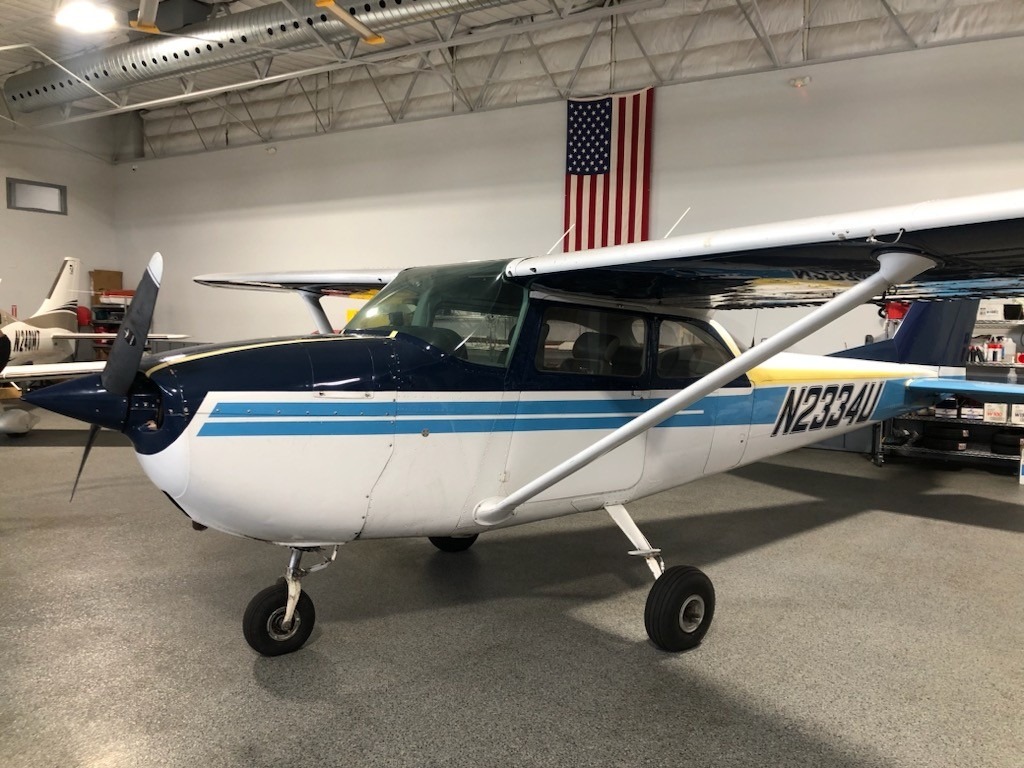
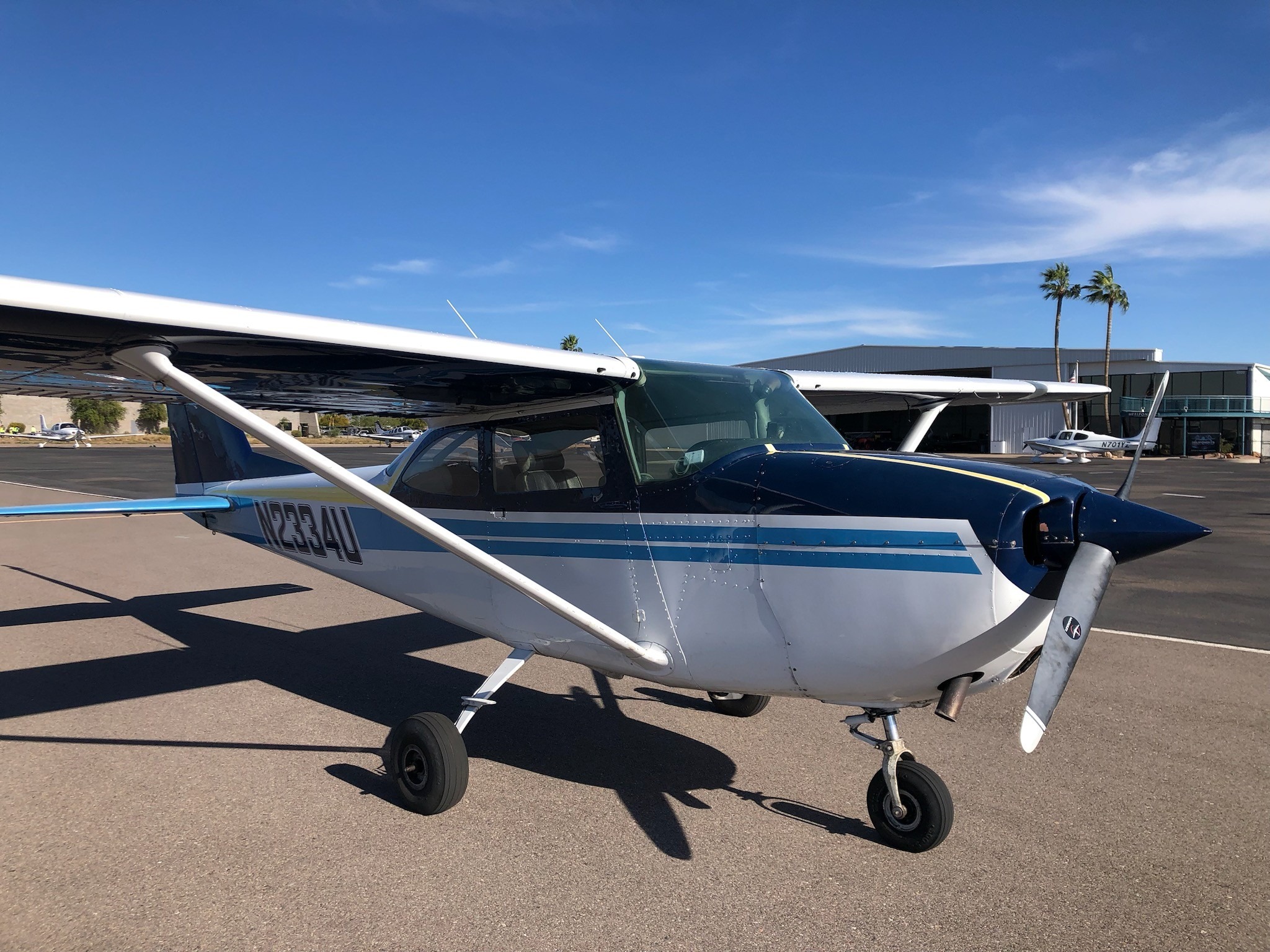
N2334U, our Cessna 172D, ready for the next lesson.
A Fleet the Shop Knows by Tail Number
Our fleet is built around ten Cessna 172s and one Diamond DA40, and the shop knows each one. A few examples from our fleet page:
| Aircraft | What the shop is looking after |
|---|---|
| N733FU, Cessna 172N | 180 HP engine, G3X Touch, GFC 500 autopilot, dual G5s |
| N5041H, Cessna 172M | G530 and G430 stack, EDM-900 engine monitor |
| N2334U, Cessna 172D | Classic six-pack gauges with a G430 |
| N728DE, Diamond DA40 | Composite airframe, G1000, autopilot |
A mixed panel fleet is a maintenance decision as much as a training one. Avionics installs, engine monitors, and autopilots all get maintained here, which is why the same shop also takes on owner-flown Cessnas and Diamonds from around Falcon Field. Read more about the avionics side in our instrument panel guide.
The Maintenance Question to Ask on Any School Tour
When you tour any school, ask where the maintenance happens and who signs the annual. The answer does not need to be “in-house” to be a good answer, and an on-field shop is not automatically safer than a trusted outside shop. What you are listening for is a school that can explain its inspection cycle, its squawk process, and its plan for your schedule when an airplane comes down, without hesitating.
If cost is part of the comparison, remember that maintenance is one reason hourly rates differ between schools, and that a lower rate on a fleet that is often grounded costs you more in lost weeks. Our cost estimator shows the planning numbers, and our financing partners can spread them out. Their terms are theirs, so read them closely.
FAQ
How often are SimpliFly’s training airplanes inspected?
Every aircraft gets an annual inspection, and training aircraft also come due for a 100-hour inspection. Oil changes and general maintenance happen between those.
Will maintenance delay my training?
Sometimes an airplane comes off the schedule. Our schedule desk moves you to another Cessna 172 or the Redbird when it can, and the shop and the desk are in the same building.
Can I watch the shop work on an airplane?
Ask your instructor. Seeing a cowling off a 172 is one of the best systems lessons you can get.
Does the shop work on aircraft that are not part of the fleet?
Yes. We service Cessna, Diamond, and other general aviation aircraft for owners at Falcon Field. Use the maintenance request form to get in touch.
What should I do if I notice something during preflight?
Do not fly it. Tell your instructor, write it up, and let the shop decide. That is the system working the way it should.
See the Shop for Yourself
The best way to judge a school’s maintenance is to stand next to it. Come to Falcon Field, walk the ramp, and ask to look inside the hangar. We will introduce you to the people who keep the fleet flying and show you the airplane you would train in. Schedule a visit to SimpliFly and bring your questions.