Private Pilot License in Phoenix: How Heat Shapes 2026 Training
Published by
Greg Hadley
In This Article
At 6:30 on a summer morning, the ramp at Falcon Field is still cool enough to touch the wing. You preflight a Cessna 172, take off, and the airplane climbs the way the book says it should. Fly the same airplane at three in the afternoon in July, and it rolls farther down the runway and climbs more slowly over the East Valley. Nothing is wrong with the airplane. The hot air is thinner, and the 172 feels it.
If you’re planning a private pilot license in Phoenix, heat is the biggest local factor in how your training feels. It changes aircraft performance through something called density altitude, it pushes summer lessons toward the cooler hours, and it brings monsoon storms, dust, and afternoon bumps. The same climate also gives you flyable weather in every season, which is a real advantage when you’re trying to finish a private pilot program on pace.
What Density Altitude Does to Your 172 on a Hot Afternoon
Density altitude is the altitude your airplane performs at once heat is counted. The FAA defines it as pressure altitude corrected for nonstandard temperature. Hot air is thinner air, and thinner air makes the airplane act as if the airport sits higher than it does.
Falcon Field sits at 1,394 feet above sea level. On a cool day, a 172 performs close to that elevation. On a hot day, it performs as if the field were much higher. The FAA’s own example is an airport at 500 feet with a reported density altitude of 5,000 feet, where airplanes “perform as if the airport elevation were 5,000 feet.”
Three things raise density altitude: altitude, temperature, and humidity. Phoenix doesn’t have high elevation on its side, but it has plenty of heat, and heat does most of the work. Humidity plays a smaller role, mostly during monsoon season.
When density altitude goes up, the FAA lists four effects you’ll feel from the left seat:
- A longer takeoff roll, because the wing needs more distance to make enough lift in thin air.
- A weaker climb, because the engine makes less power and the propeller has less air to bite.
- A faster true airspeed on approach, even though the airspeed indicator reads the same.
- A longer landing roll, because you touch down moving faster over the ground.
Our fleet is built around ten Cessna 172s with normally aspirated engines, so every one of these effects applies to the airplane you’ll learn in. Our post on why the Cessna 172 works so well for training explains why it’s a forgiving airplane to learn these lessons in.
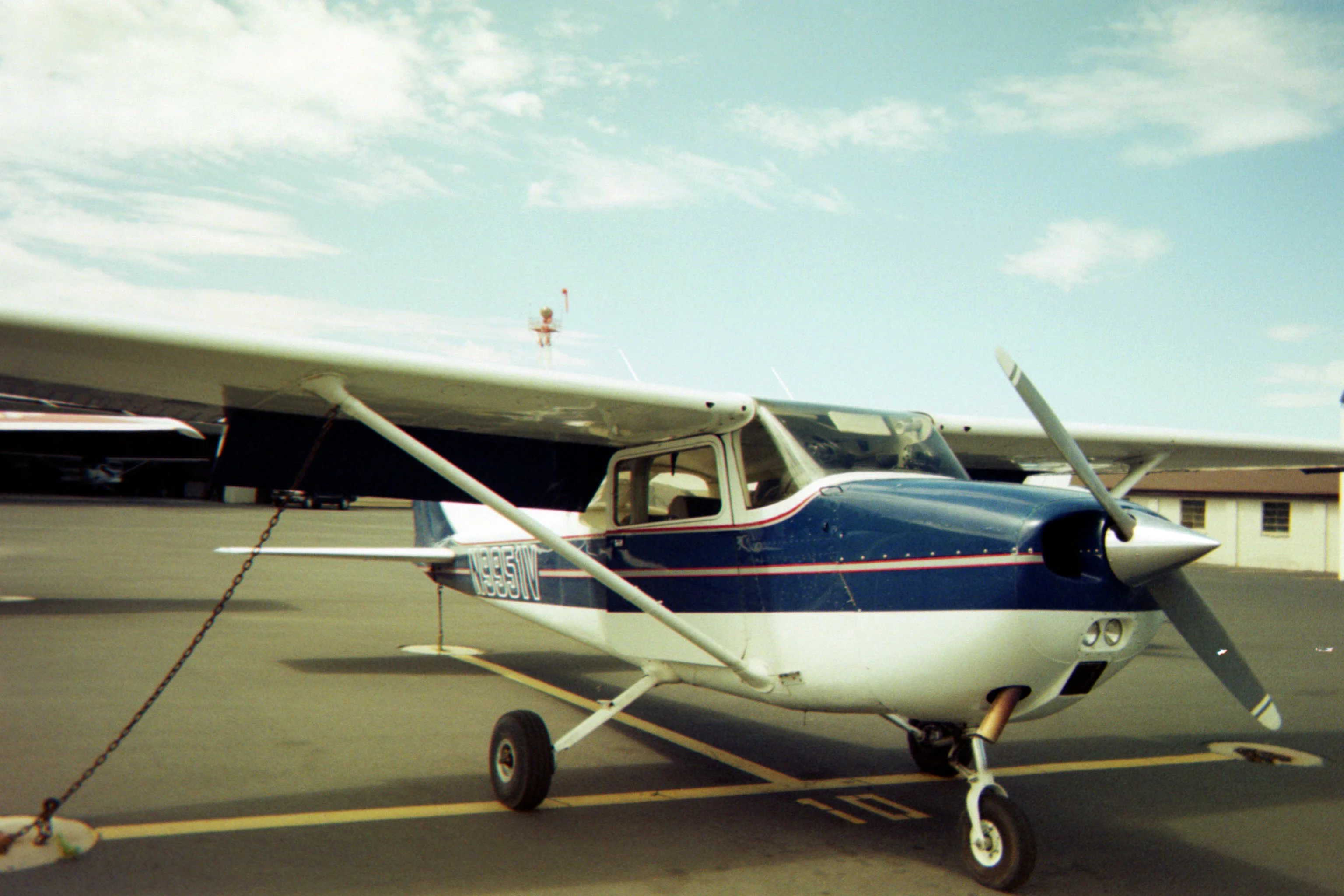
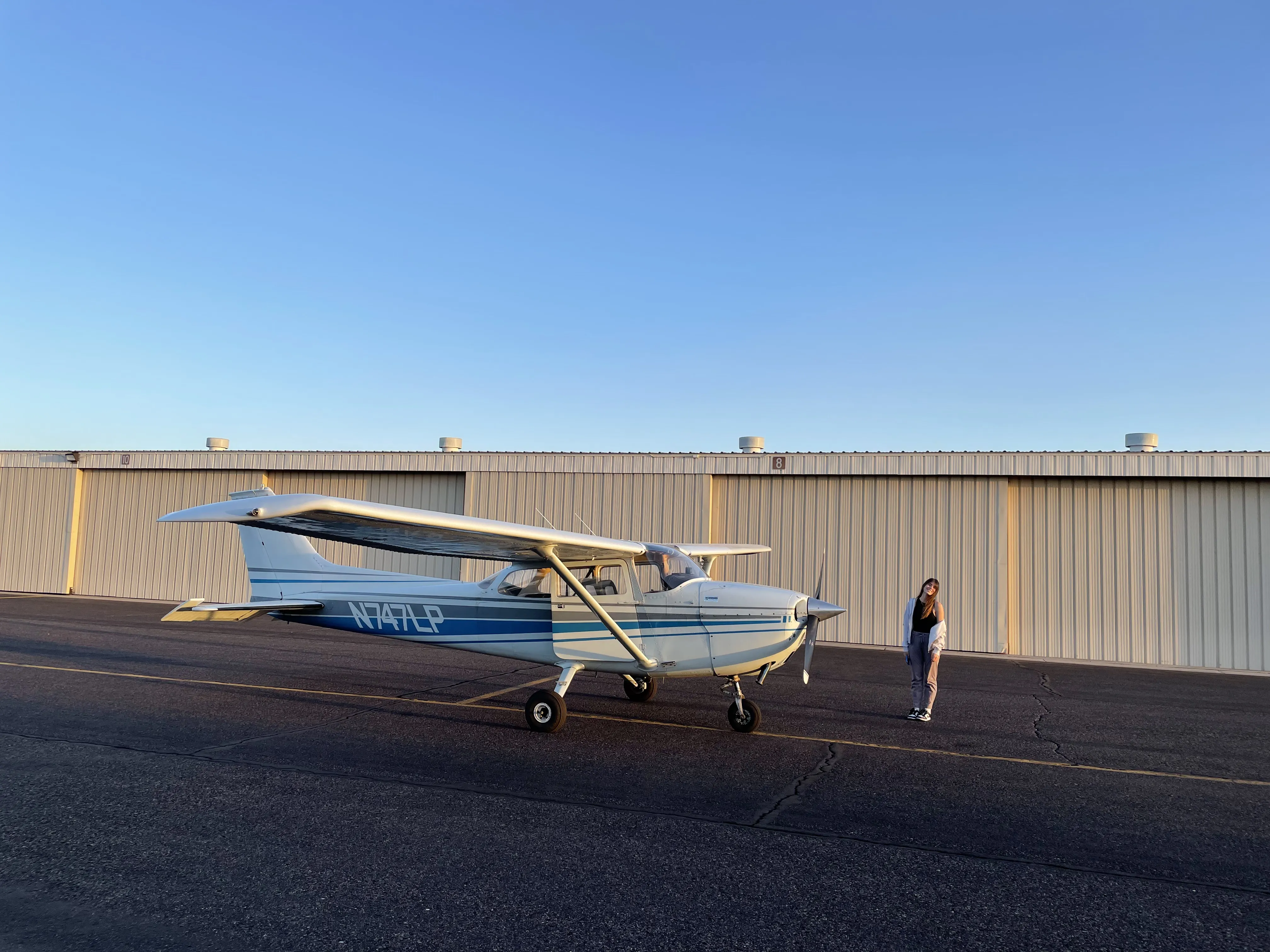
A Cessna 172 on the ramp, the airplane most of our students learn in.
Learn to Work the POH Charts Before Hot-Day Flights
The 172’s Pilot’s Operating Handbook (POH) is the manufacturer’s manual for the airplane, and its performance charts are where hot-day planning starts. The FAA notes that published book numbers assume standard sea-level conditions of 59°F and 29.92 inches of mercury. Phoenix in summer is far from standard, so you calculate the day’s takeoff distance and climb performance with the current temperature and pressure.
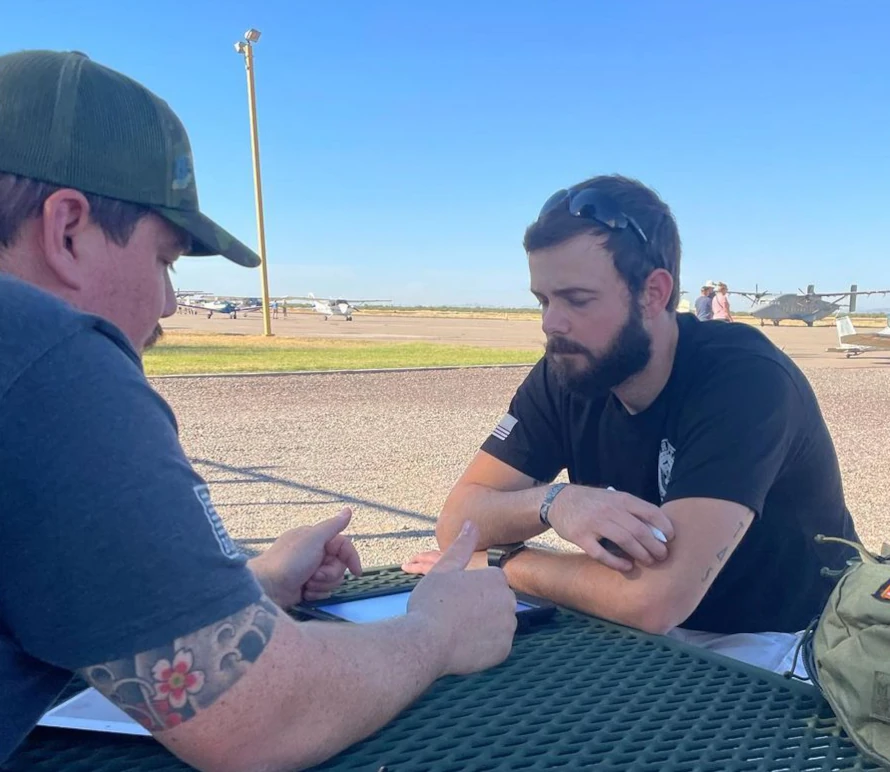
Early in your training, your instructor will sit down with you at the table and walk through those charts. The POH and the day’s conditions set the numbers for each flight, and learning to find them is a skill you’ll use for every airplane you fly after this one. You’ll build a few habits along the way:
- Check the temperature and density altitude in your preflight weather briefing.
- Run the takeoff and climb charts for the actual conditions, not a typical day.
- Lean the mixture by the POH procedure when density altitude is high. The FAA recommends leaning for best power above 5,000 feet density altitude in normally aspirated engines.
- Add margin for humidity. The FAA suggests adding about 10 percent to computed takeoff distance when humidity is high.
The FAA’s Density Altitude safety pamphlet is a short, useful read before your first summer lesson. Students who learn this math in Phoenix usually carry a healthy respect for hot, high airports wherever they fly next, and the skill fits right into the safety habits covered in our post on aviation safety standards at SimpliFly.
Plan Summer Lessons Around the Cool Part of the Day
The FAA’s advice on density altitude is direct: when performance is in question, schedule flights during the cool hours of the day, early morning or late afternoon. In a Phoenix summer, early morning usually wins. The air is smoother, the airplane performs better, and you’re back on the ground before the ramp heats up.
Here at SimpliFly, we ask every student to fly three to four times a week and to commit to the six-hour training window for their training stage. On hot days, your instructor will often aim the flight at the cooler end of that window. That keeps you flying through summer instead of waiting for fall. You can read how the weekly rhythm works on our Pilot Training Made Simple page.
Heat wears on the pilot as much as the engine. Bring water, eat before you fly, and dress for a hot cockpit during the walkaround. A tired, dehydrated student learns more slowly, and summer lessons go better when you treat hydration like part of the preflight.
Monsoon Season: Learn to Read the Sky Over the Valley
The National Weather Service counts Arizona’s monsoon season from June 15 to September 30. Storms don’t fill every day of it, but when moisture moves in, the afternoon sky over the Valley can change quickly. Storms tend to build as the day heats up, which is one more reason the morning lesson is the summer favorite.
Monsoon storms bring hazards you’ll learn to spot from the ground:
- Gust fronts, the cool, gusty outflow winds that can run miles ahead of the rain.
- Blowing dust, sometimes a wall of it, that can cut visibility fast.
- Strong turbulence and wind shear near the storm.
The FAA’s guidance is to give a severe thunderstorm about 20 miles of room. As a student pilot, you’ll learn to look at the radar, the clouds building over the mountains, and the dust on the horizon, and make the call to stay on the ground or come home early. Making that call is part of your training, and you’ll make it as a private pilot long after the checkride. Our guide to personal minimums for Arizona flying shows how to turn those calls into limits you write down before each flight.
A storm day doesn’t have to be a lost day. When an airplane or the weather takes a flight off the schedule, our schedule desk can move you to another 172 or to the Redbird simulator for instrument-reference practice. The maintenance shop post explains how the shop and the schedule desk keep your week moving.

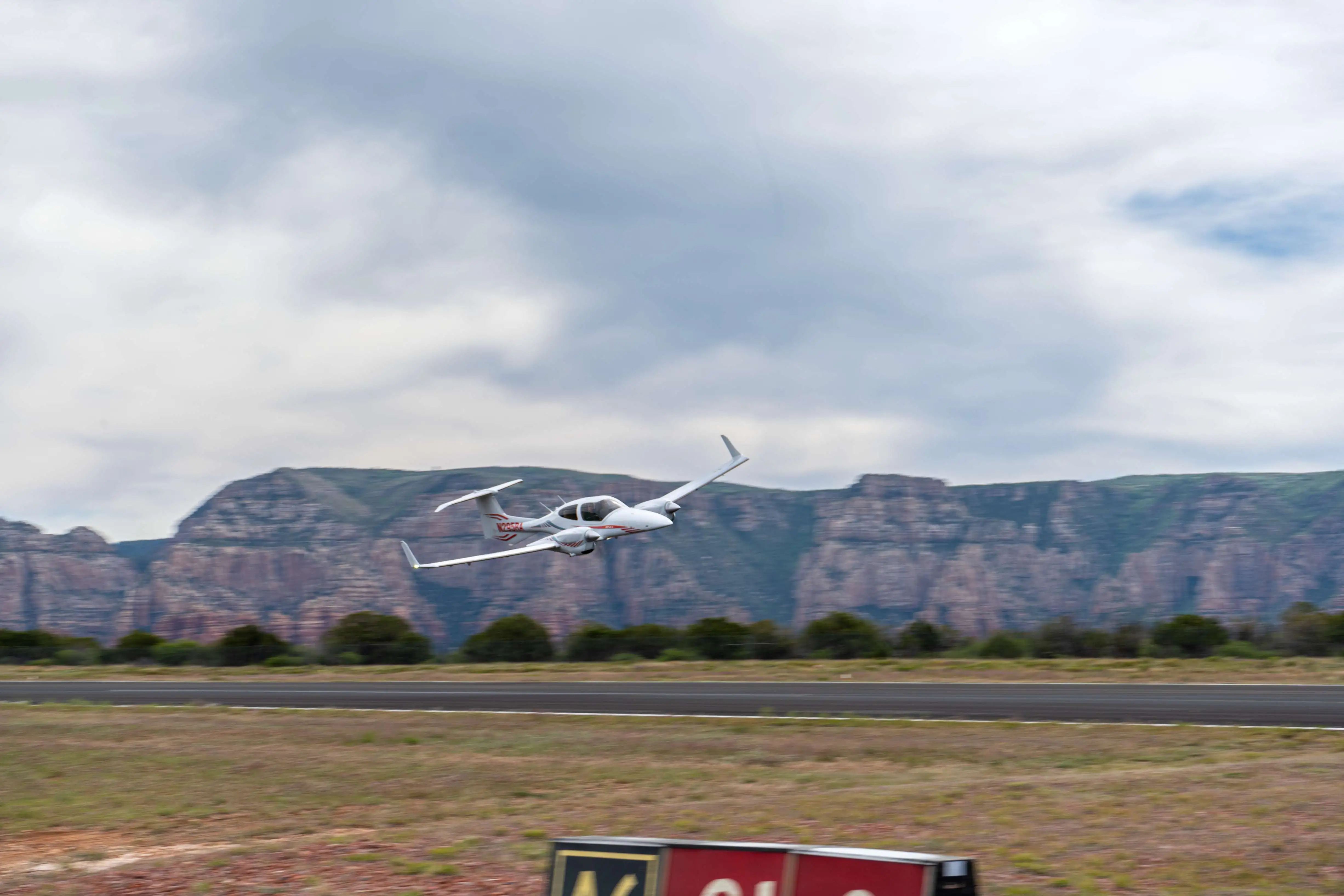
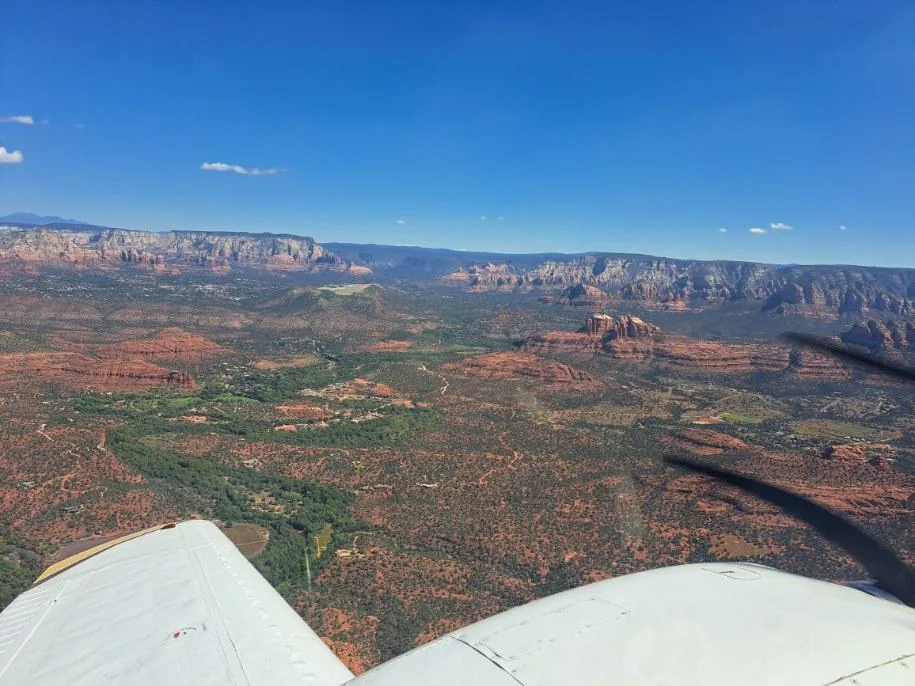
Building clouds over the desert are a cue to plan your route and your return.
Expect Afternoon Bumps and Use Them as Practice
Even without storms, hot afternoons over the desert get bumpy. The ground heats unevenly, and bare desert rock and pavement heat faster than vegetated land. Warm air rises in columns, cooler air sinks around them, and the airplane bounces as it flies through. The FAA’s weather guidance notes these convective currents are strongest on warm summer afternoons with light winds.
Morning lessons often feel smoother for this reason. Bumps are uncomfortable, but they’re manageable, and flying through some of them with an instructor teaches you to hold altitude and airspeed when the air won’t sit still. Your instructor will choose when a bumpy day is good practice and when it’s better to fly early and keep the lesson focused on the maneuver.
Use Arizona’s Flying Weather to Finish on Pace
For most students, the bigger factor is how much of the year you can fly. Arizona’s dry climate means fewer rain and snow cancellations than many parts of the country, and that’s why some students move here to train. Our instructor Riley Lemley and his wife relocated to Arizona so he could train year-round, and he finished all of his training with us. Our Mesa pilot training page covers what local students get from the airspace and the weather.
Weather still moves some lessons, even in Arizona. Across a full year, though, steady weather lets you fly on a steady schedule, which saves you from re-flying lessons you’ve already learned. Here’s how each season tends to shape private pilot training at Falcon Field:
| Season | What you’ll notice | How it helps your plan |
|---|---|---|
| Fall (October to November) | Cooling temperatures and better aircraft performance | A strong time to start Private Pilot training and fly steadily |
| Winter (December to February) | The coolest air of the year and the lowest density altitude | Good for maneuvers, pattern work, and long Private Pilot cross-countries |
| Spring (March to May) | Warming afternoons and rising density altitude | Keep three to four flights a week as you near solo and checkride prep |
| Summer (June to September) | Heat, high density altitude, monsoon storms from June 15 | Fly early, work the POH charts, and use storm days in the Redbird |
Most of our students finish the private in three to six months, depending on how often you fly, weather, and aircraft and instructor availability. If you start in the fall, you can do much of your flying in the cooler months. If you start in summer, you’ll learn density altitude early, and that’s a skill every pilot needs. The FAA requirements are the same either way, and our private pilot license requirements checklist lays them out in order.
Plan your budget around $18,000 to $20,000 for the private, and see the line items in our private pilot license cost breakdown. We don’t lend directly, but we work with Stratus Financial, Flight Training Finance, and AOPA Finance, and our financing page explains each option.
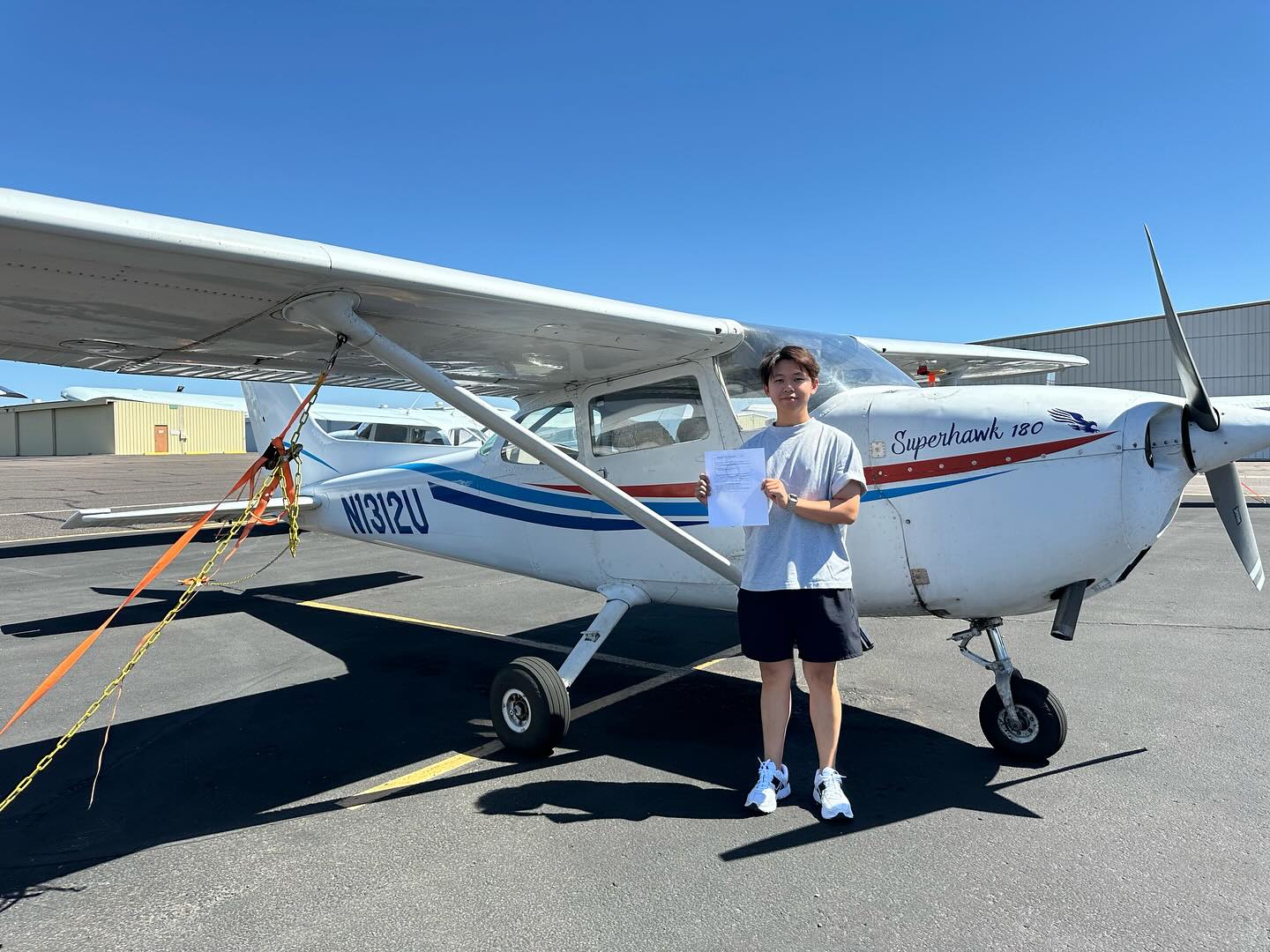
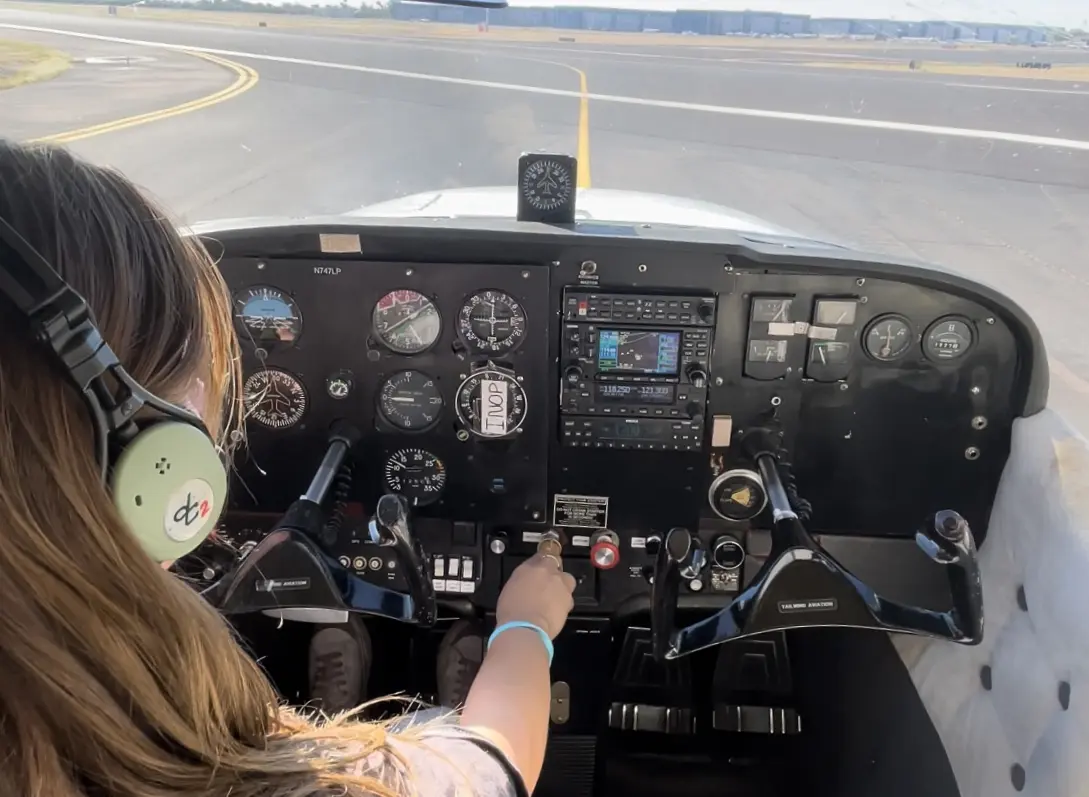
A clear Arizona day on the ramp after a milestone flight.
FAQ
Can I train for a private pilot license in Phoenix during the summer?
Yes. Summer training works well when you fly the cooler hours, plan for density altitude, and keep an eye on monsoon storms in the afternoon.
What is density altitude in simple terms?
It’s the altitude your airplane performs at once heat is counted. Hot air is thin air, so the airplane needs more runway and climbs more slowly.
Does summer heat slow down private pilot training?
It can move some lessons, mostly in the afternoon. Flying three to four times a week and scheduling early flights keeps most students on pace.
When is monsoon season in Arizona?
The National Weather Service counts it from June 15 to September 30. Storms come and go within that window.
Is Arizona a good place to earn a private pilot license?
For many students, yes. You can fly in every season, and Falcon Field gives you towered-airport experience from your first lessons.
What happens if weather cancels my lesson?
Our schedule desk can move you to another airplane or the Redbird simulator when it can, so the day still counts toward your progress.
See Falcon Field’s Flying Weather From the Left Seat
A discovery flight puts you in the left seat of one of our Cessna 172s for about 60 minutes in the air, and you fly most of it. Afterward, we’ll sit down with you and map out a training plan that fits the season you start in. Book your discovery flight and we’ll get you in the air.