Questions to Ask on a Flight School Tour Before You Enroll
Published by:
Julie Hadley
In This Article
A website can tell you a school has airplanes. A tour tells you whether those airplanes are flying today, who is flying them, and whether the person at the front desk knows your name by the time you leave. If you are comparing flight schools in the Phoenix East Valley, the hour you spend on the ramp is worth more than any brochure, because you are about to commit months of your calendar and a serious amount of money to one place.
Here at SimpliFly Flight School at Falcon Field in Mesa, we invite prospective students to come visit before they enroll, and we would rather you show up with hard questions than easy ones. Below is the list we would bring if we were the ones choosing a school: what to look at, what to ask, and what a good answer sounds like.
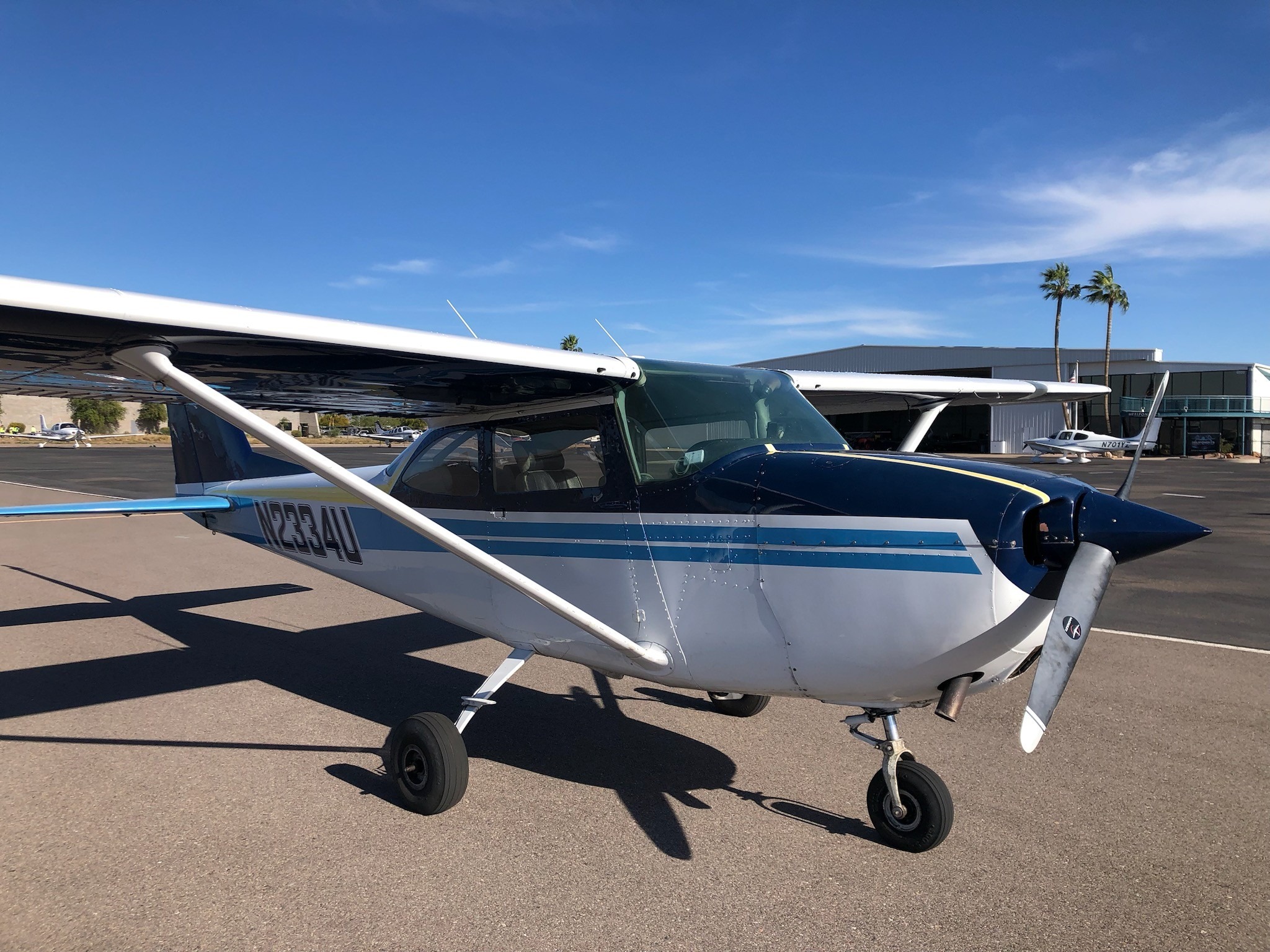
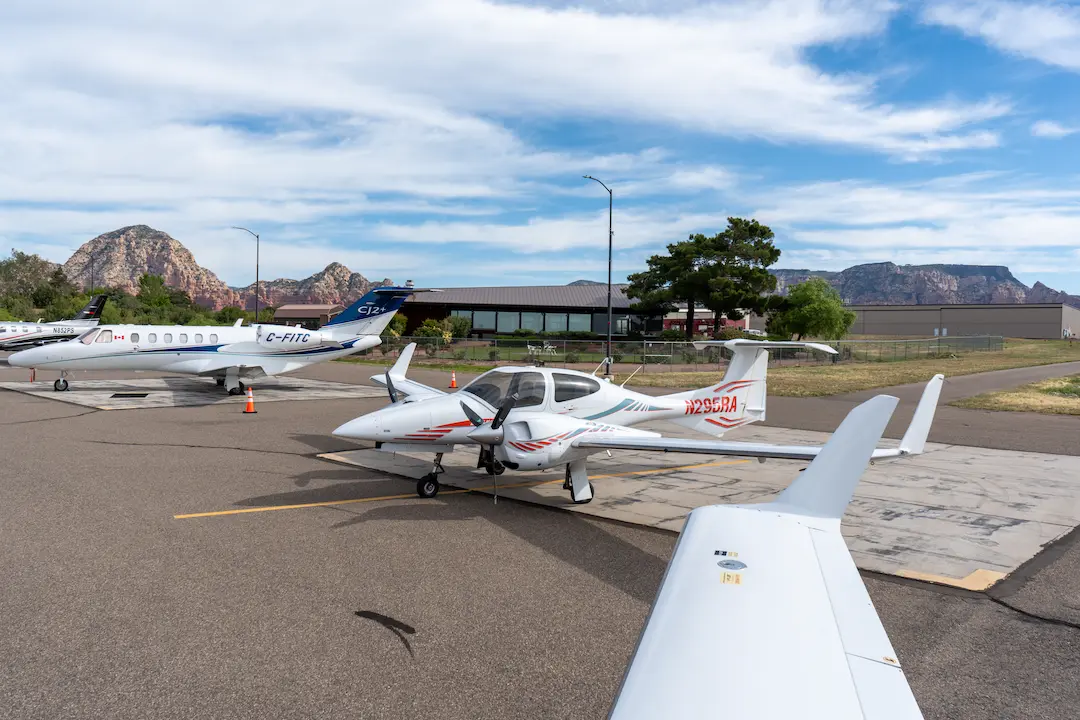
The ramp tells you a lot before anyone says a word.
Start on the Ramp, Not in the Office
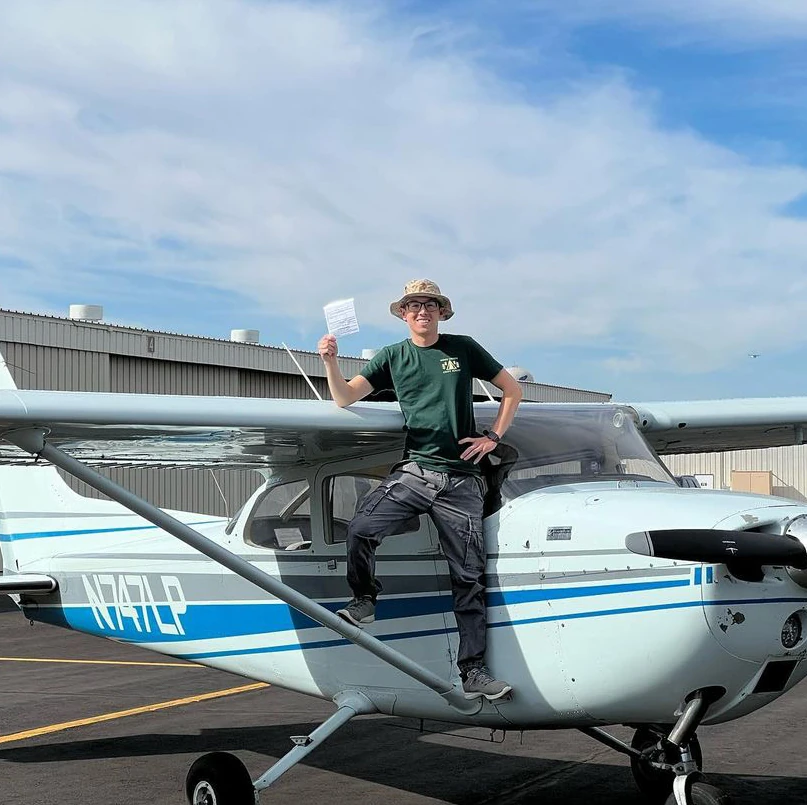
Ask to walk the flight line first. Count the airplanes, read the tail numbers, and ask which ones you would actually train in. A school with ten aircraft on paper and three on the ramp has a scheduling problem you will inherit.
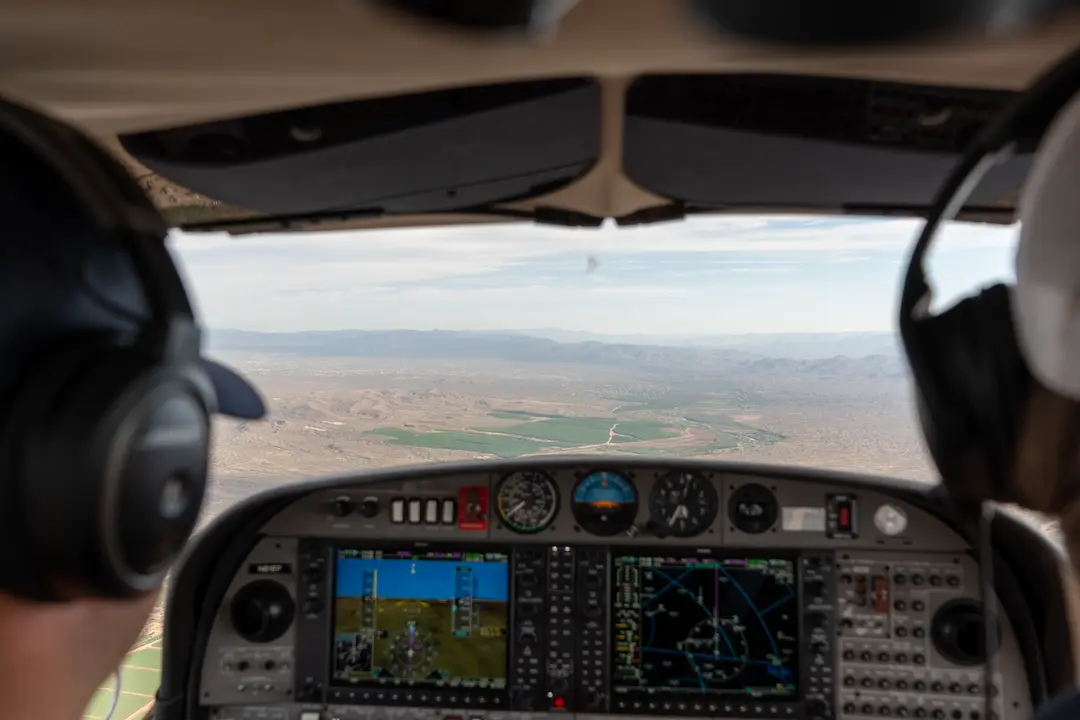
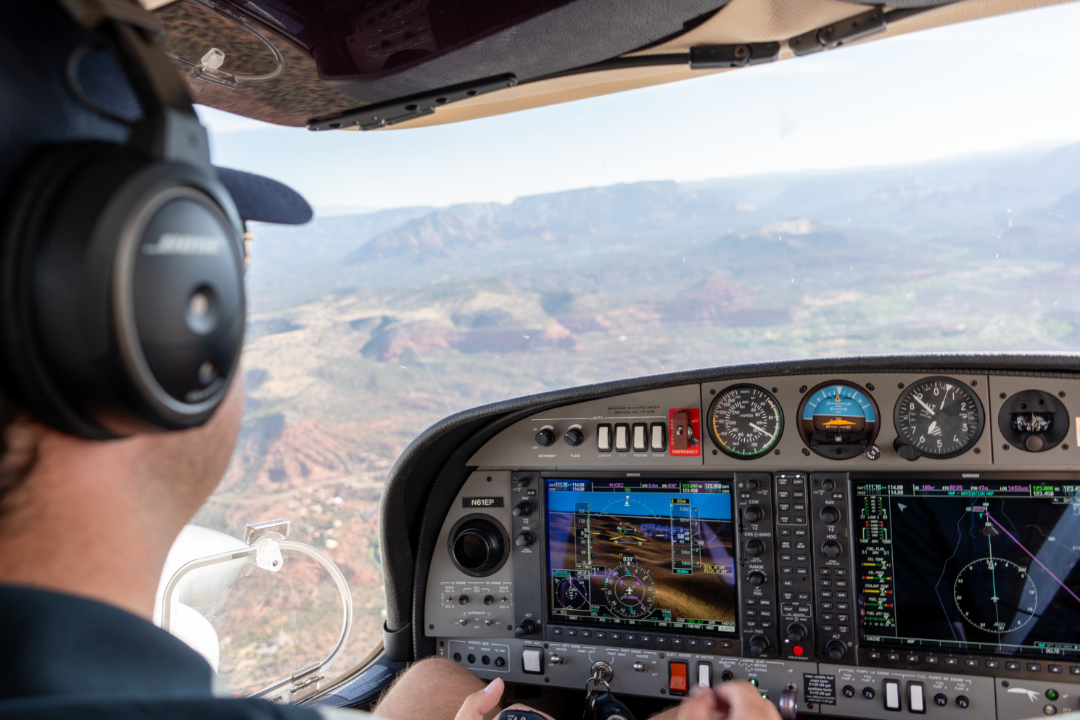
Look inside a cockpit. In our fleet, most primary training happens in Cessna 172s, and the panels are not identical. Several carry dual Garmin G5s and a G430, a few still have the classic six-pack gauges, and N733FU has a G3X Touch and autopilot. That mix is on purpose: you learn round-dial fundamentals and glass in the same fleet, so the panel in your checkride airplane will not be a surprise.
Then ask the question most visitors skip: who maintains these airplanes, and where? At Falcon Field, our maintenance shop is on the field with an A&P/IA on staff, so the airplane you squawk after a lesson goes to people who work here. Training aircraft flown for hire come due for a 100-hour inspection on top of the annual, and a school should be able to tell you plainly how that cycle is tracked and who signs it off.
Ask to See the Schedule Desk
The schedule is where training momentum lives or dies. Ask how far out you can book, how many lessons a week a full-time student flies, and what happens when an airplane goes down for maintenance. At SimpliFly, our career-track students fly three to four times a week, and the people building that schedule, Daisy and Dakota, are instructors themselves who know what a stalled week costs a student.
If you plan to train around a job, say so on the tour. Part-time private pilot training is welcome here, and the answer you want from any school is a specific one: which days, which instructors, and how the school keeps you from losing progress between lessons. A vague “we’ll fit you in” is a warning sign.
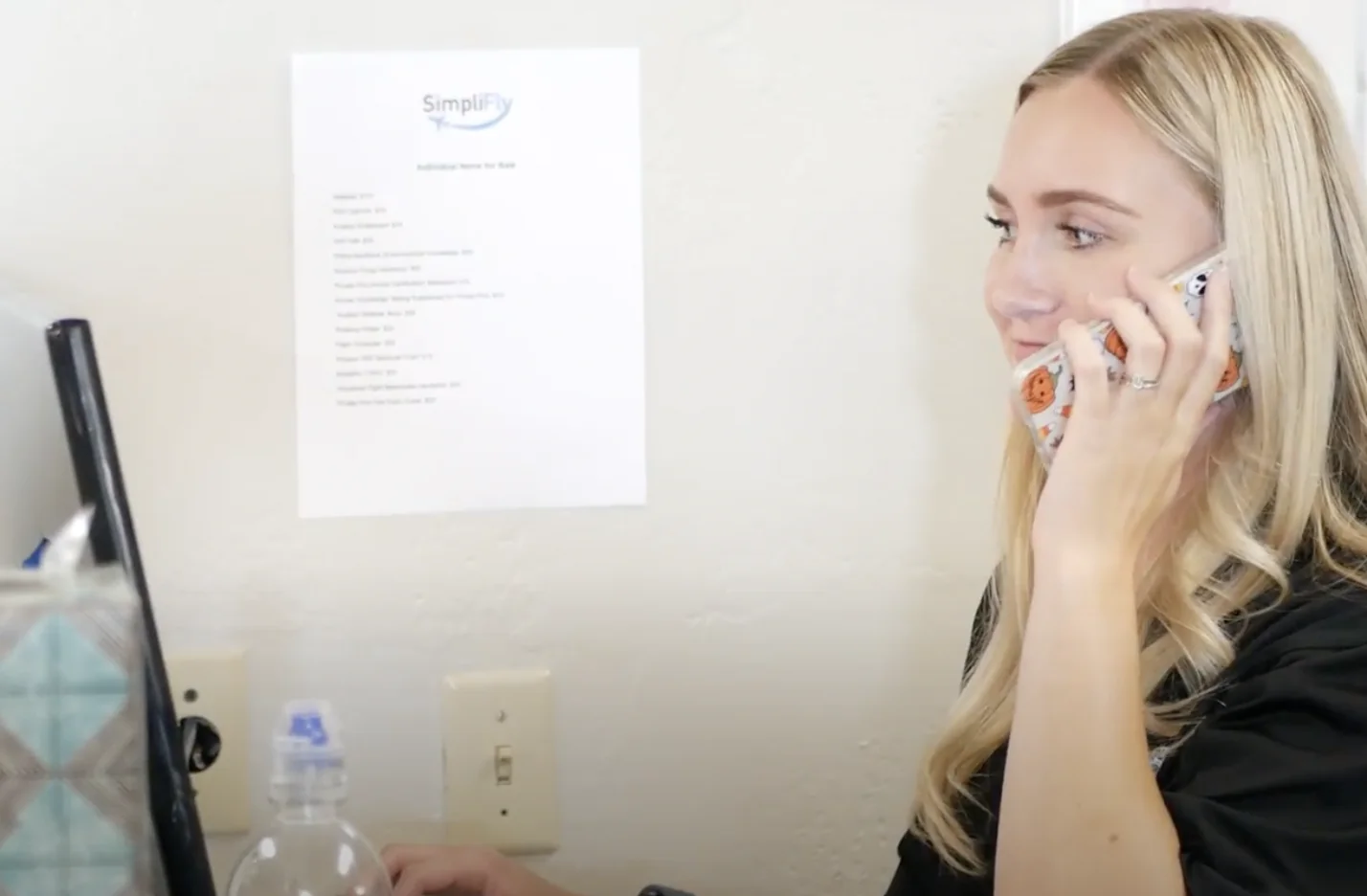
Ask who runs the schedule and how they handle a maintenance day.
Meet the Instructor You Would Actually Fly With
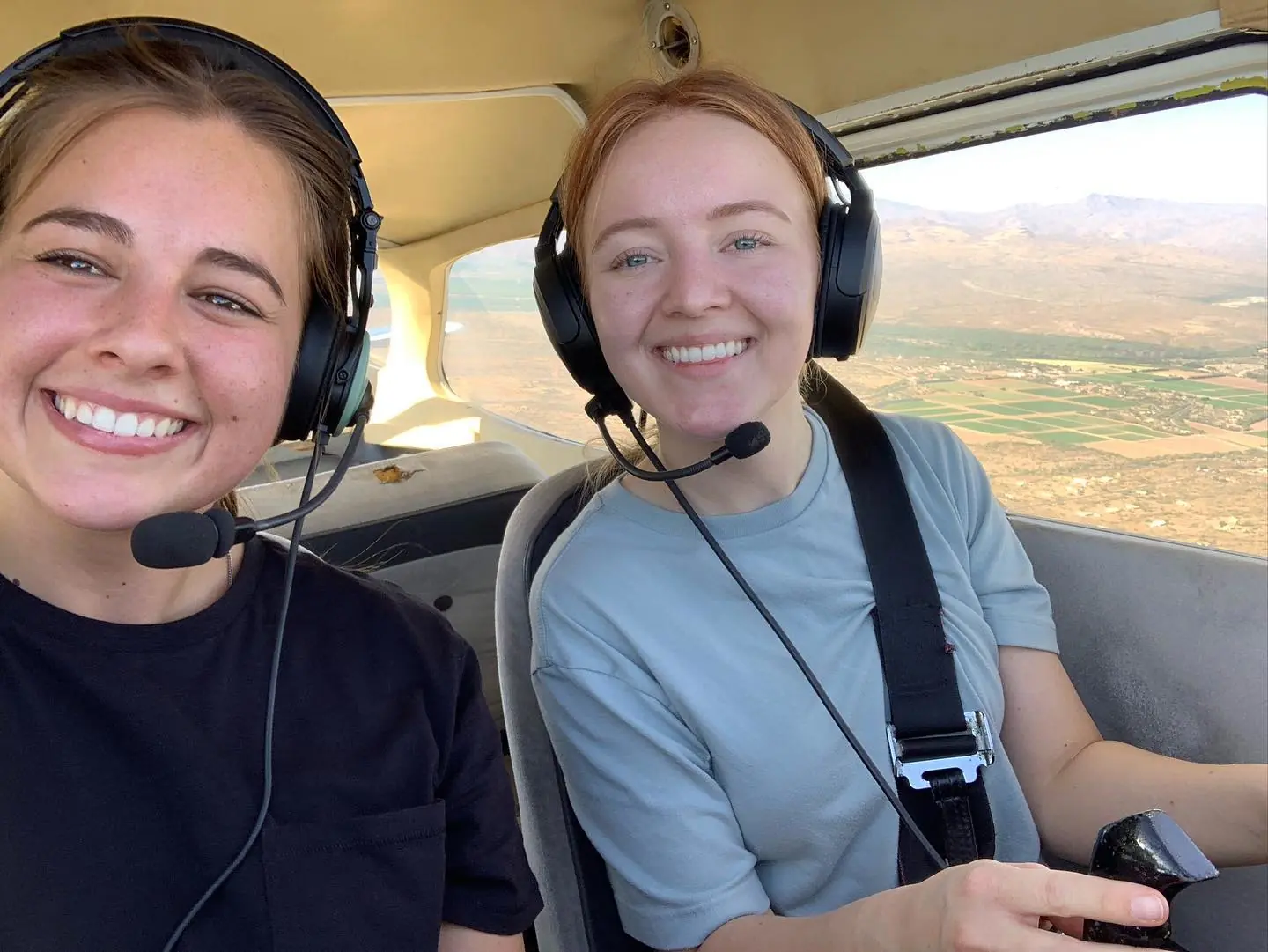
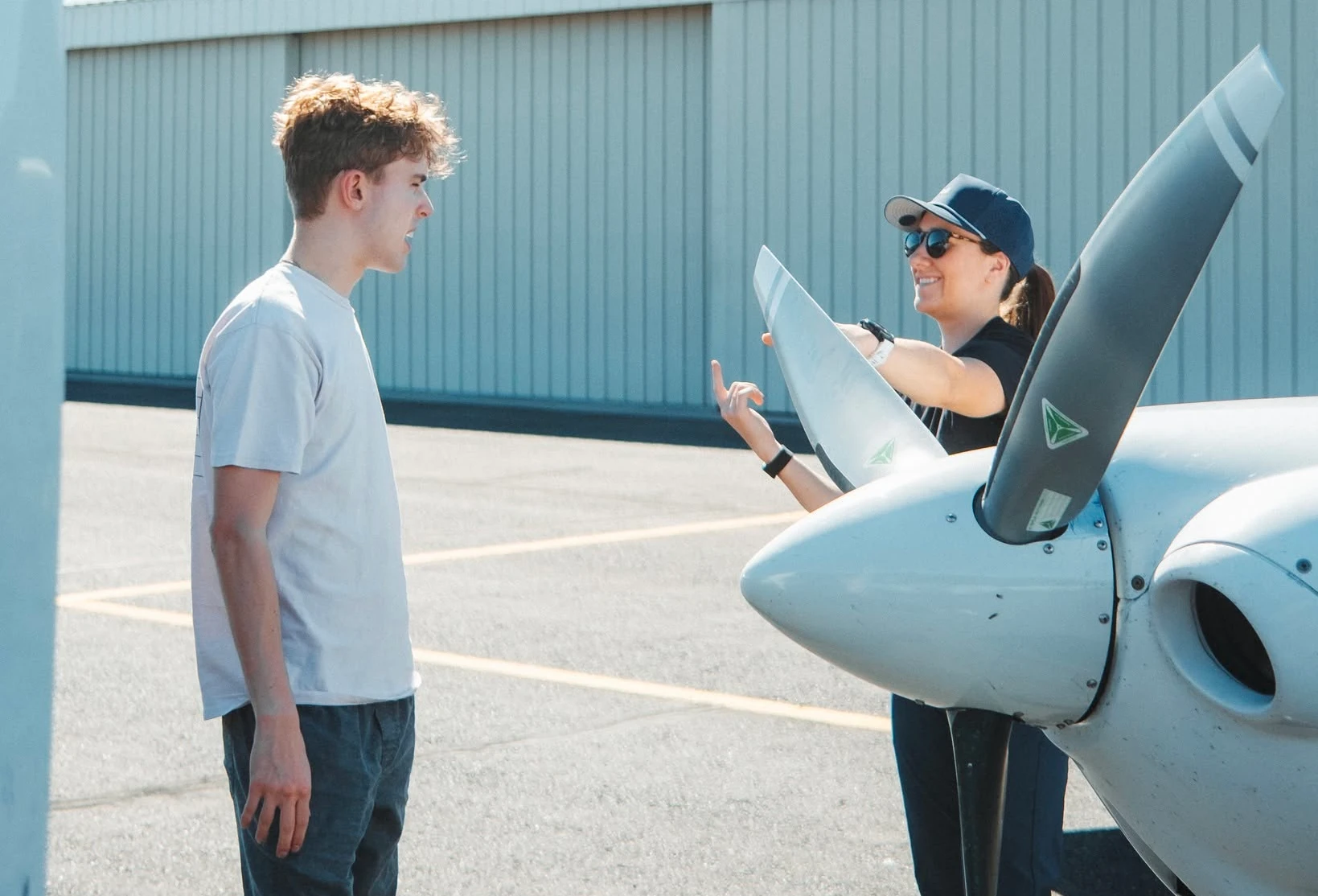
Ask to meet an instructor, then ask that instructor two things: where did you train, and how long have you been teaching here? Instructors who finished the same program you are considering can tell you what the hard weeks look like. Several of ours did exactly that. Josh Perkins completed all of his training here in 14 months and now teaches in the same airplanes he learned in, and Riley Lemley and Dakota Rice both trained here before they started instructing. You can read their backgrounds on our team page.
Also ask how the school handles instructor turnover. Instructors build hours and move on to airlines, which is healthy, but you want a school with a plan for handing a student to the next instructor without restarting lessons.
Ask What the Quote Includes Before You Compare Prices
Every school will hand you a number. Ask what is inside it. Aircraft rental, instructor time, ground instruction, knowledge test fees, checkride examiner fees, headset, and study materials are all separate line items somewhere, and two quotes that look different are often the same total with different things left out.
Plan to budget around $18,000 to $20,000 for a private pilot certificate with us, and use our training cost estimator to see how the number shifts as you add ratings. The estimator is built on FAA minimums, so treat it as a planning floor, and read our cost FAQ for the full list of questions to bring to any school.
Financing belongs in this conversation too. We do not lend money ourselves, but we work with Stratus Financial and Flight Training Finance regularly and can walk you through what each one asks for. Their terms are theirs, so read them closely, and see our post on financing questions to ask before you sign anything.
Ask About Records, Not Just Airplanes
One question separates a careful school from a busy one: who reviews my logbook and endorsements? One student came to us after time at other schools, and our staff caught logbook and insurance discrepancies nobody had flagged, then fixed them before they became a checkride problem. That is the kind of attention you want, and it is fair to ask any school how they audit training records before a checkride.
While you are on the topic, ask how the school prepares students for checkrides. Stage checks with a different instructor, mock orals, and an early conversation about examiner scheduling are all signs that the school has done this many times. Our aviation safety standards post explains how we build those habits from the first lesson.
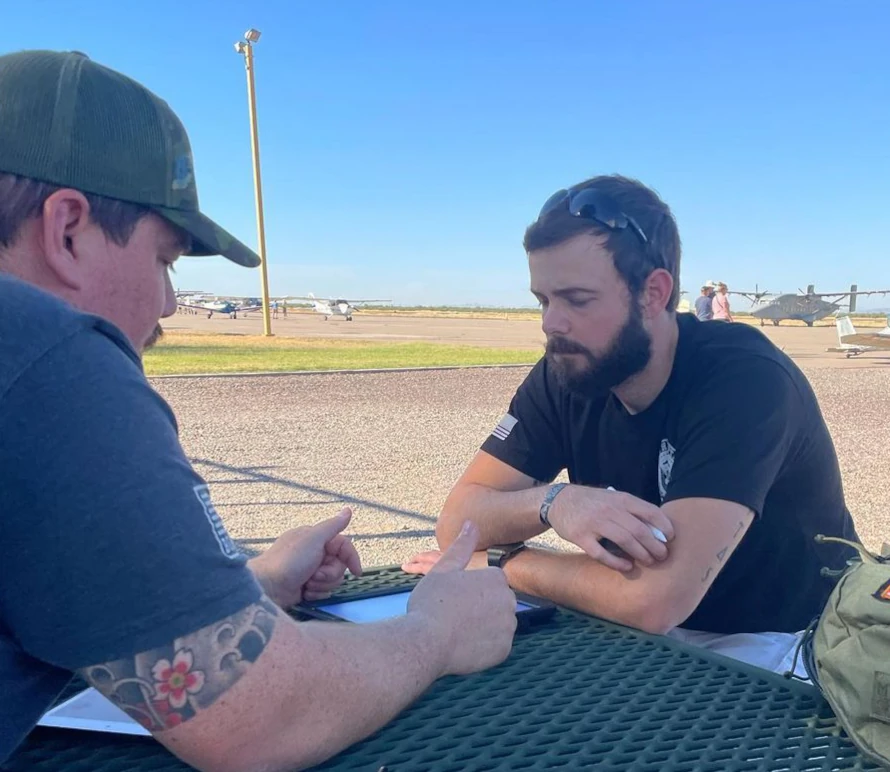
A good tour ends with a real conversation about your plan.
Listen for How the Airport Fits Into Training
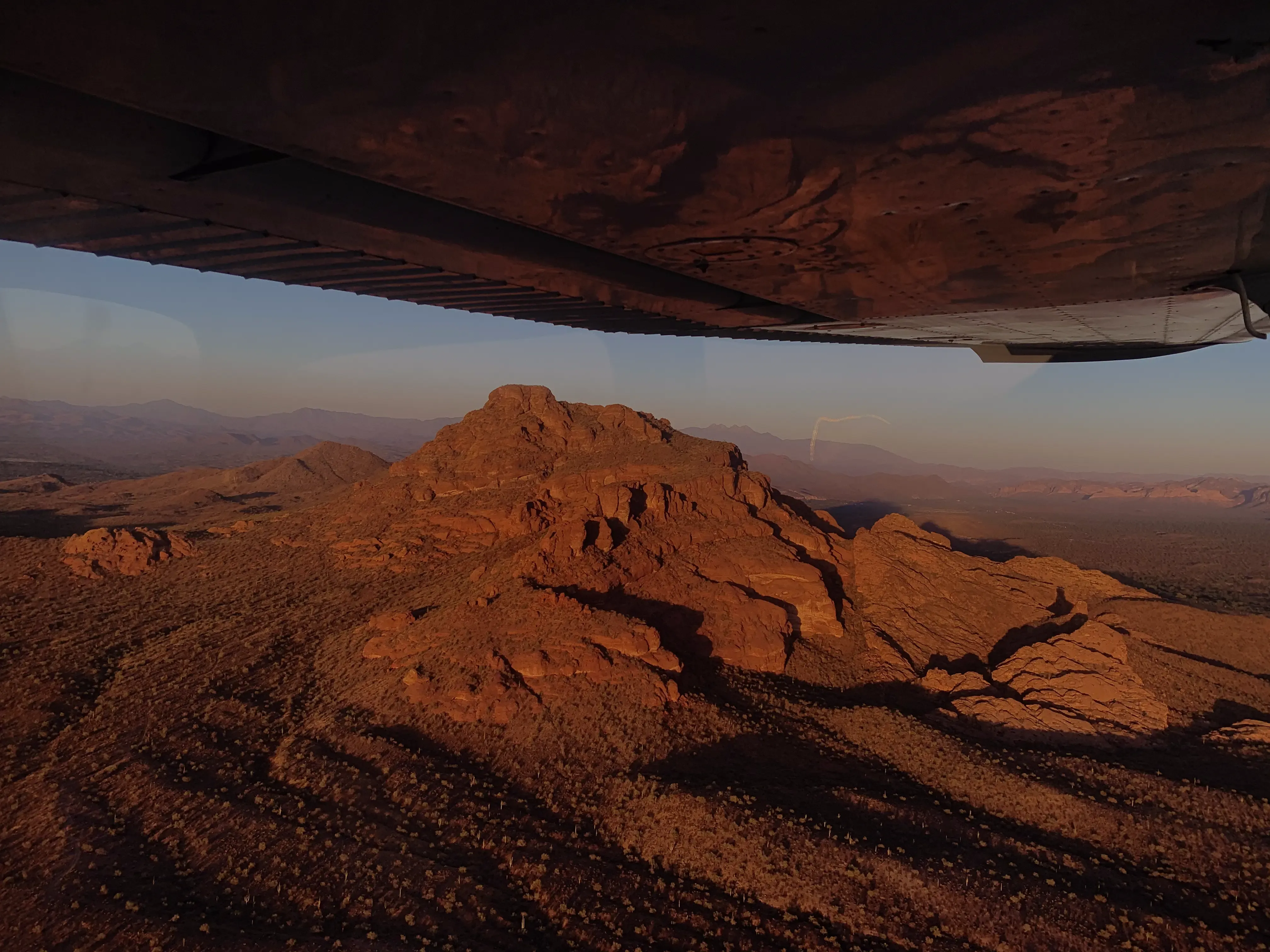
Where a school sits changes what you learn. Falcon Field is a towered airport, so you will talk to the tower on your first lesson, and by the time you solo the radio is the easy part. Ask any school you visit how their airport shapes the early lessons, what the practice areas look like, and how often weather cancels flights. In Mesa, most weeks of the year are flyable, and on the rare grounded day our Redbird simulator keeps instrument approaches sharp.
Read our guide to radio communication at Falcon Field before your visit, then stand on the ramp and listen. If the tower frequency is busy, that is real training happening.
A Quick Checklist to Bring on Your Tour
| What to look at | What you are really learning |
|---|---|
| Aircraft on the ramp vs. aircraft on the website | Whether the schedule will have room for you |
| Who maintains the fleet and where | How a squawk turns into a fixed airplane |
| The schedule desk and booking window | How fast you can build momentum |
| Instructor backgrounds and turnover plan | Whether your training survives a handoff |
| What the quote includes | Whether the number is comparable |
| Logbook and endorsement review | Whether a checkride surprise is likely |
| The airport and practice area | What you will be good at early |
If you want to see the full certificate ladder before your visit, our Zero to Hero program page walks through each stage. Bring that page with you and ask any school how their path compares.
FAQ
Do I need a medical certificate before I tour or start lessons?
No. You need an FAA medical certificate before you solo. You can tour, take a discovery flight, and start lessons before that, and we recommend scheduling the exam early.
Is a Part 61 school less structured than a Part 141 school?
Not necessarily. We train under Part 61 and run a structured syllabus with stage checks. Read why we chose Part 61 for the tradeoffs.
Should I tour more than one school?
Yes. Bring the same questions to each one and compare the answers, then compare the quotes on what they include.
Does SimpliFly provide housing?
No. Our office can point you to local options when you call.
What if I have already started training somewhere else?
Bring your logbook. We will review it with you and pick up where you are.
Schedule Your Visit to Falcon Field
The questions above take about an hour to work through on the ramp, and you will leave knowing more than any website can tell you. Pick a weekday morning when the flight line is busy, bring your logbook if you have one, and come meet the people who would be training you. Schedule your visit to SimpliFly and we will walk the ramp with you.